Showing posts with label atheism. Show all posts

Tuesday, 22 January 2013

On computer programming, atheism and human cognizance

What started as a light-hearted comment to one of my friend's Google+ posts about the structure of the snowflake ultimately got me thinking about epistemology and the self-imposed limits of human cognizance. In the comment I had jokingly stated that all snowflakes were probably just an artefact of an L-system (*) written by a bored programmer. Now, when one starts thinking about it, the following chain of thoughts immediately comes to mind: Creator / God, Reality / Universe, Evolution, Atheism, Richard Dawkins. All right, I admit that the last sentence was only half-serious but I am sure that now you will be able to understand why I came to the conclusion described below.
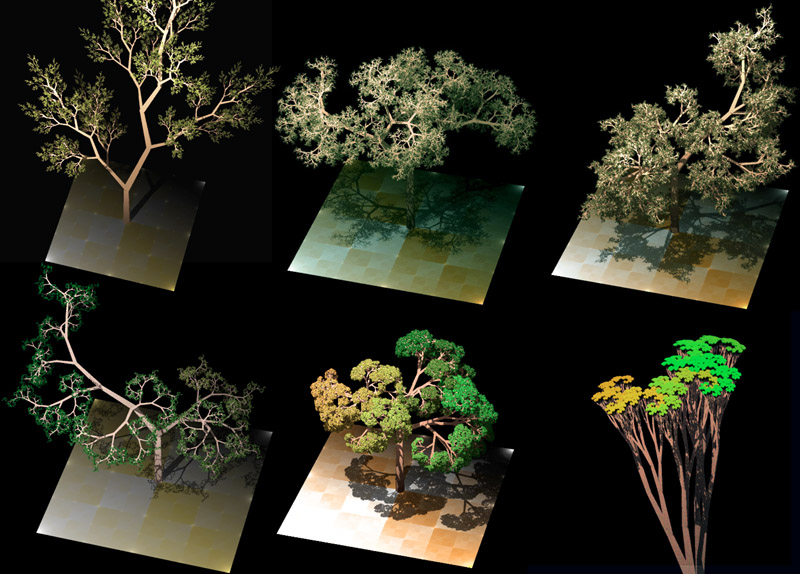


For someone like me, atheists like Richard Dawkins seem to be completely irrational when they try to use Evolution as “proof” that Life and Universe could not have been created. Till now I was assuming they had behaved that way just because, as any fundamentalists, THEY ARE irrational (and they are) but now I see that the reason for their madness is twofold. So what is the second reason? It is just that they are not computer programmers ;). For any programmer or mathematician (**) it is natural and obvious that one system can be just an artefact of another system – e.g. a snowflake or a snowflake-like structure (system 1) which may be perceived by us in 3D space and is a part of our material reality can be a product (or a by-product) of functioning of a completely different system 2 which may operate in a totally different space (if you are still not bored but at the same time a little “lost in space”, you may want to check some Wikipedia articles on mathematical concept of space and to fully appreciate the vastness and importance of this topic read about the algebraic space, function space, topological space and so on) and thus may be immaterial and impossible to directly visualise. And yet system 2 may produce something as tangible as snowflakes. One can also put it differently and more succinctly – one system may be just an emergent property of another (possibly hidden) system (again, if you feel a little lost, you may want to read a Wikipedia article on complex systems theory).

What I describe above is so obvious to us (i.e. mathematicians, programmers, system scientists etc.) that we do not usually think about it or even consider that others (and especially other scientists) could have such an impaired perception / poor understanding of reality – which explains why it took some effort for me to consider the possibility that an evolutionary biologist like Dawkins could lack that additional layer of perception which would perfectly explain his flawed reasoning that led him to conclusion that Evolution contradicts the idea of God. Well, it does not. Evolution and God are perfectly compatible. God may be viewed as a programmer who created the Universe/Multiverse, life and each of us by creating a system (or writing a programme/algorithm if you will) which makes our Reality and lets all the events unfold precisely as planned. The material part of this creation (i.e. what Science deals with and what materialists postulate is the only thing that exists) is a chaotic system (you may want to read about Chaos Theory as well - a very cool part of Mathematics) and this brings about another interesting topic – namely that of Free Will. Since chaotic systems are deterministic in nature there is no free will if you are part of such system unless you believe in the concept of soul which is not a part of the material world but is interfaced with it via your material body.

Ah, so many interesting topics and so little time.


To save you some googling:

* An L-system or Lindenmayer system is a parallel rewriting system, namely a variant of a formal grammar, most famously used to model the growth processes of plant development, but also able to model the morphology of a variety of organisms. An L-system consists of an alphabet of symbols that can be used to make strings, a collection of production rules which expand each symbol into some larger string of symbols, an initial "axiom" string from which to begin construction, and a mechanism for translating the generated strings into geometric structures. L-systems can also be used to generate self-similar fractals such as iterated function systems.

** If you do not understand why computer programmers and mathematicians were put in one bag I recommend reading “On the cruelty of really teaching computing science” by one of the titans of computer science famous prof. Edsger Dijkstra. Here are some interesting quotes:

“A further benefit is that it gives us a clear indication where to locate computing science on the world map of intellectual disciplines: in the direction of formal mathematics and applied logic, but ultimately far beyond where those are now, for computing science is interested in effective use of formal methods and on a much, much, larger scale than we have witnessed so far.”

“The programmer is in the unique position that his is the only discipline and profession in which such a gigantic ratio, which totally baffles our imagination, has to be bridged by a single technology. He has to be able to think in terms of conceptual hierarchies that are much deeper than a single mind ever needed to face before. Compared to that number of semantic levels, the average mathematical theory is almost flat. By evoking the need for deep conceptual hierarchies, the automatic computer confronts us with a radically new intellectual challenge that has no precedent in our history.”

Tuesday, 10 April 2012

"The Divide" Embodies Ideals of Atheistic Capitalism


I have just watched The Divide and it made me think about the new socially created reality the western world is preparing for humanity.  It is a secular world without God where human beings are no more than animals fighting for resources, survival and pleasure.  It is a world where the measure of success is survival and power over others no matter the cost as long as it is not "the successful" who has to pay it.  It is a world ruled by fear where altruism, empathy, sense of justice, mercy and goodness of heart are nothing more than a sign of weakness and an object of ridicule.  It is an ugly world with no room for ethics, no appreciation of aesthetics, a world deteriorating into a primordial goo of barbaric hedonism and savagery.  Fallen creatures (or should I say beasts) inhabiting that world are no longer civilised... they have no manners, no style, no higher needs, no beauty in them.  Do we really want to enter this brave new world?  Do you want your children to live in a world depicted so thoroughly in The Divide?  Do you want them to become such creatures themselves?
The microcosm of The Divide shows what it means for an average human being to attain complete freedom promised by Atheism where there is no God serving as a mirror reflecting our deeds back unto us and showing us what we are and what we can become.  Sure, there may be exceptions - there may be some people who, in spite of being atheists and materialists, would not turn into ruthless savages even when subjected to the most extreme conditions.  But an average member of the subspecies Homo sapiens sapiens, when persuaded to believe that there is no God, no soul, no further existence after death, will be smart enough to understand that there is only one true value in life and that is his/her well-being.  The only rational goal is to survive for as long as possible and to experience as much pleasure as possible and let others pay the cost.  Watch the film and, irrespective of your current belief system (i.e. whether you are an atheist or a theist), ask yourself a very cynical question: "Is our race ready to live in a world without God, in a world where faith is no longer a safety net for the law and social pressures?".  When viewed from such perspective, the divide between atheist and theist beliefs becomes something else.  It is no longer a question of what is true but a question of what truth do we want everyone to believe in.

--
As an aside, for a true atheist and materialist, the truth is what they believe in (metaphysical questions, like the one about the existence of God, are by definition unverifiable using the scientific method - the only verification would be possible post mortem and in their world view there is no post mortem) which means that if such a person chooses to believe in the existence of God then that belief becomes the truth for them.

Richard Dawkins Scared of Evidence


Another example showing dogmatic (not to say fanatical) attitude of an infamous militant atheist Richard Dawkins.  This time Richard was not interested in fighting theists or religion but scientists whose research did not agree with Richard's worldview.  Here are some interesting excerpts (the whole can be read here: http://www.sheldrake.org/D&C/controversies/Dawkins.html):
 

We then agreed that controlled experiments were necessary. I said that this was why I had actually been doing such experiments, including tests to find out if people really could tell who was calling them on the telephone when the caller was selected at random. The results were far above the chance level.
The previous week I had sent Richard copies of some of my papers, published in peer-reviewed journals, so that he could look at the data.

Richard seemed uneasy and said, “I’m don’t want to discuss evidence”. “Why not?” I asked. “There isn’t time. It’s too complicated. And that’s not what this programme is about. The camera stopped.

The Director, Russell Barnes, confirmed that he too was not interested in evidence. The film he was making was another Dawkins polemic.
...
Richard Dawkins has long proclaimed his conviction that “The paranormal is bunk. Those who try to sell it to us are fakes and charlatans”. Enemies of Reason was intended to popularize this belief. But does his crusade really promote “the public understanding of science,” of which he is the professor at Oxford? Should science be a vehicle of prejudice, a kind of fundamentalist belief-system? Or should it be a method of enquiry into the unknown?

Like Rupert Sheldrake, I dream about science being a method of enquiry into the unknown - i.e. free from aggressive fundamentalists like Dawkins.  Unfortunately, I fear that the majority of people nowadays calling themselves scientists do not behave like open-minded geniuses and would feel at home in the ranks of Spanish Inquisition.

--
If you are interested in Rupert Sheldrake and his research there is an interesting video of his speaking at Google Tech Talks in 2008 entitled The Extended Mind: Recent Experimental Evidence.  The part where he recounts his meeting with Dawkins starts here: http://www.youtube.com/watch?feature=player_detailpage&v=JnA8GUtXpXY#t=5193s

Wednesday, 29 October 2008

Atheist propaganda

I have stumbled upon yet another atheist propaganda clumsily disguised as a balanced article whose author pretends to be objective and friendly towards theists and their beliefs. Here are some excerpts with my "subtitles" showing what the author tried to smuggle, in between lines, to his readers' heads:


'Being openly atheist can have drawbacks for some of us. Your God fearing boss might not give you that promotion - or worse.'

Religions other than Atheism make people unethical.


'You are often confused as having God hatred. The ignorant think you belong to a cult.'

Atheists are bright. Theists? Not so much.


'But I am a man of reason and logic.'

Atheists are enlightened. Theists are backward and have huge problems with logic and rational thinking.


'If you say 'cows can fly' I will laugh heartily in your general direction but not completely dismiss you. Show me evidence of the orbiting bovine and I will take that laugh back.'

Theists' belief that God exists is laughable and on a par with statements like "cows can fly".


'You see by default everyone is born atheist in the technical sense of the word. Children are too young to understand the complexities of religion and what it means to believe in a God.'

Theists' beliefs are unnatural because people do not know nor understand them when we are born. If they were true, they would be natural, like atheism, which is natural and therefore true because we know that all babies both understand atheism and are atheists. Apart from the false belief in God, everything else in existence we don't know when we are born, like Physics and the laws of nature, is an exception to this rule and, as such, is true.


'I might add that unlike a lot of my God fearing friends'

Theists live their life in fear. The life of an atheist is better. Be free from fear!


'This isn't the dark ages after all. And besides, I would consider that a form of child abuse.'

Theists are child abusers still living in the dark ages. Atheists are different as they do not train their children to adhere to theist beliefs but allow them to "choose" atheist belief.


'I want my children to learn about God and read the Bible, and when they are old enough even explore other religions if they so desire.'

Atheists are better than theists, because they do not force anything on their children but rather allow them to study Bible and other religions from the atheist point of view (i.e. after children fully "understand" that all beliefs incompatible with Atheism are false).


'The reason I want my children to learn about religion is because although no-one can prove the existence of God to me, I on the other hand cannot 100% disprove the existence of God, even though every last shred of evidence would seem to.'

Not only are atheists the only people who were able to estimate the probability of non-existence of God (and, as such, can make legitimate evaluations of which belief is more probable and which is not) but there is overwhelming evidence (?!) clearly showing to any reasonable mind that there is no God.
No one could even try to prove the existence of God. On the other hand, though it is true that the author cannot FULLY disprove God but it does not mean that disproving God is impossible. Quite the opposite... probably...


'This is what separates believers from atheists. Religious people will not allow for the possibility that God might not exist. If they did, then they are technically Agnostic.'

Atheists are open-minded. Theist are not. Theists who are open-minded stop being theists so, by definition, there are no open-minded theists. Open-minded atheists do not stop being atheists even when they become agnostic and stop claiming that there is no God.


'Science however acknowledges the possibility of God however remote, because good science is about the collection of evidence to support theories, and the subsequent process of trying to disprove said theories.'

There is no God and Science knows it, but it needs to acknowledge the possibility of God to be able to prove its impossibility ;). Atheists do not need to wait for Science to disprove anything because they know the truth and Science will also, eventually, learn that truth.


'When my children get older they will naturally follow what they believe or disbelieve, and I will want it to be their choice - not mine or anyone else's.'

Unlike theists, atheists are good for their children because they allow them to "choose" atheism while theists, in contrast, force their children to choose theism.


'They (children) are too young to understand now but one day they will thank me for it.'

Atheists' children are too young to understand why they have to become atheists but it is for their own good and, since atheism is so much superior to theism, they will eventually feel grateful. Let us remind everyone here that theists' children are abused and forced to believe in theism! No one would be grateful for something like that!


'The chances are high you were doctrined into the same religion as your parents.'

All belief systems other than atheism are guilty of brainwashing their younglings. Atheism is different. Atheism is all about free will and the freedom of choice.


'You could argue the same can be said for atheists - that they need to have experienced religion before simply discarding it. That may be an overstatement, because you could say 'how do you know you wouldn't like Nazism if you haven't tried it?' - as there are some things we can all be certain of without trying.'

All religion (apart from Atheism) is as despicable as Nazism and people should not try it because even without trying it is obvious that it is better for them to be atheists.


'But religion differs in that there is a common theme of peace, harmony, enlightenment etc...and one main difference of course being the Deity in question. Jehovah? Ganesh? Christna? Yet some people will kill in the name of rather than concede there may be more than one God.'

Theists are dangerous hypocrites - they tell you lies about peace and harmony but what their religions are really about is killing and deception. And, of course, there is no God because all belief systems other than Atheism differ between themselves. Oh and Pol Pot did not used to murder families of theists who did not want to become atheists because he was a fanatical atheist but because he was evil. By the way, crusaders and popes were killing other theists not because popes and crusaders were evil but because theism implicates killing and suffering.


'But I like to think that this generation (my generation) might be a little more open minded when it comes to religion.'

Theists are so close-minded. If you want to be cool you have to become an atheist. Choose the bright future, not the gloomy past!


'If we don't keep asking the question, we will be slaves to the religious concept forever without knowing an alternative.'

All theists are blind slaves. Atheists are different because they do not believe in some unproven superstitious nonsense but in scientifically proven truth revealed to all atheists.


'Partly as a 'guess what?' to those who didn't know this about me, and also for anyone who might be afraid to explore atheism.'

Explore atheism or everyone will think you are a coward!


'The mere fact you are questioning religion says you are probably more open minded than your religious colleagues.'

So you are questioning your religion? Good boy...
No? Better start questioning it or everyone will know you are a narrow-minded fool!

New marketing trick is being used by atheists to brainwash less bright

Atheists love to announce to everyone that their credo is on a par with any scientifically proven assertion. Recently, I have noticed that some of them adopted a new way of deceiving agnostics and theists (and, in most cases, I am sure, also themselves) into believing that Atheism is not based on belief. Since it was impossible for them (or anyone else for that matter) to prove their claim that "there's no god" they modified it and now you can hear and read everywhere (e.g. on some buses in the UK) that "there's probably no god". This way they try to avoid the necessity of confronting the fact described in my previous post, where I explained that Atheism is, without doubt, based purely on belief (like any other religion - be it (in alphabetical order ;) ) Christianity, Islam or Judaism).

Are atheists right? Is their new claim any more "scientific" than the previous one? No.

What did they confuse this time?

They abused the word "probably". Since no one can calculate (or even estimate) the probability of (non-)existence of god their use of this word, from the scientific point of view, is invalid. In other words, both their statements are basically the same as "probably" just does not mean anything when (ab)used this way.

So what do I think about the new atheist campaign in the UK? Is it silly? Certainly... but will it be successful? I expect that a crowd of new atheist converts will soon mushroom in Britain. It is a shame that such a primitive trick will wreck havoc among weaker minds.

Monday, 11 August 2008

Atheism - a new religion ashamed of being a religion

Remains of a tiny fraction of ~2,000,000 victims massacred by an atheist regime led by Pol Pot.
As most (if not all) of the Atheists I have met so far seem to have a real problem with semantics and accepting the fact that Atheism, like any other religion, is based on belief, I will follow Jesus's example and explain it using plain words (plus a pinch of elementary Logic).

Let us start...


When one asks a question "Does God exist?", one will get the following answers from the following different categories of people:

Theist: Yes.

Agnostic: I don't know.

Atheist: No.


Let p represent the statement "God does exist.". Here are the statements made by our actors:

Theist: p

Agnostic: p v ~p

Atheist: ~p

Agnostic's statement (p v ~p) is a tautology and, as such, is always true. The other two are not tautologies and, before any of them can become anything more than just a mere hypothesis, must be proven. Since neither Theist (p) or Atheist (~p) can prove their hypothesis, neither of them can be called a fact. Everyone who still maintains that one of these hypotheses is true, is nothing more, than a believer. This is an unquestionable fact and anyone who tries to fool you into thinking otherwise is denying the laws of Logic and, as such, should be called either a fool or a charlatan.

Q.E.D. ;)


Actually, let me share one more thing with you.  Here is a definition of religion by a titan of modern anthropology, professor Clifford Geertz, who studied religion and defined it as a "system of symbols which acts to establish powerful, pervasive, and long-lasting moods and motivations in men by formulating conceptions of a general order of existence and clothing these conceptions with such an aura of factuality that the moods and motivations seem uniquely realistic.".  Atheism, Buddhism, Christianity, Communism, Islam, Judaism - they all have something in common: each of them is a religion.  Two of them are different from the others in one respect though - the followers of those two usually do not like to admit that they are part of a religion… probably because religion is just opium for the masses and nowadays everyone wants to be special ;).


Popular Posts